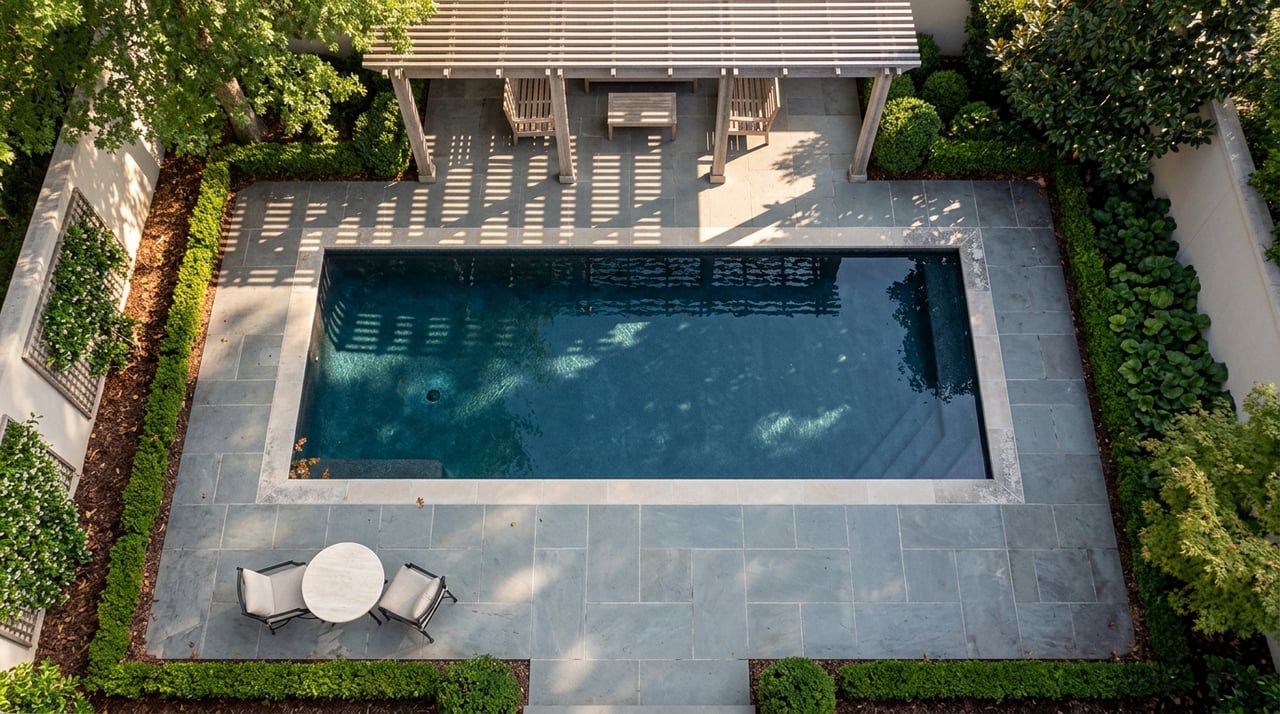
On certain evenings, if the wind comes from the right direction, Brookwood Hills smells faintly of hops. SweetWater Brewing Company sits on the other side of a wooded buffer with no direct access to the neighborhood, but the tanks fire up anyway and the air carries what it carries. Inside the three stone entrance pillars, the pool is doing what it has done every summer since the 1930s: kids on the swim team, parents on lounge chairs, tennis balls somewhere in the background. A few minutes' walk away on Peachtree Road, a storefront that spent 2023 through early this year as a mezcal bar called Pata Negra reopened this spring under a new name and a new menu.
Both things are true at once, and neither is an accident. Brookwood Hills has built two different systems for two different jobs: one that keeps the interior frozen, and one that lets the edge churn as fast as the market wants it to.
The Line City Hall Actually Drew
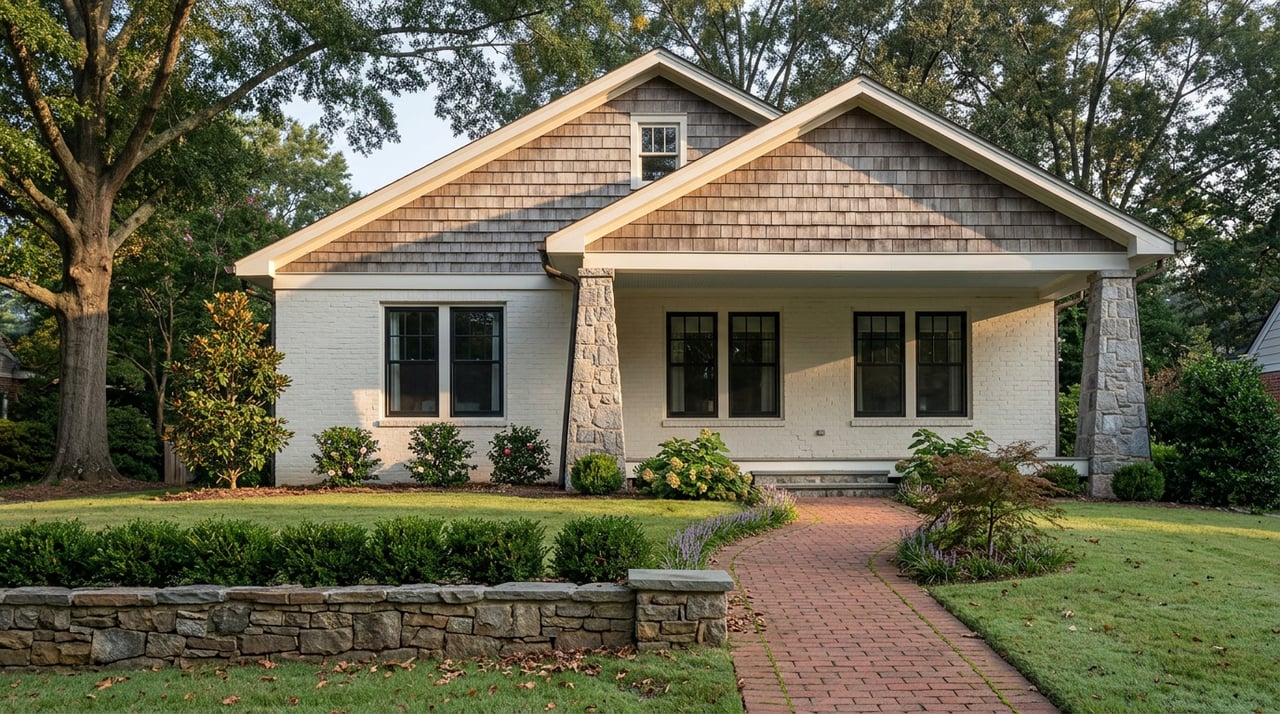
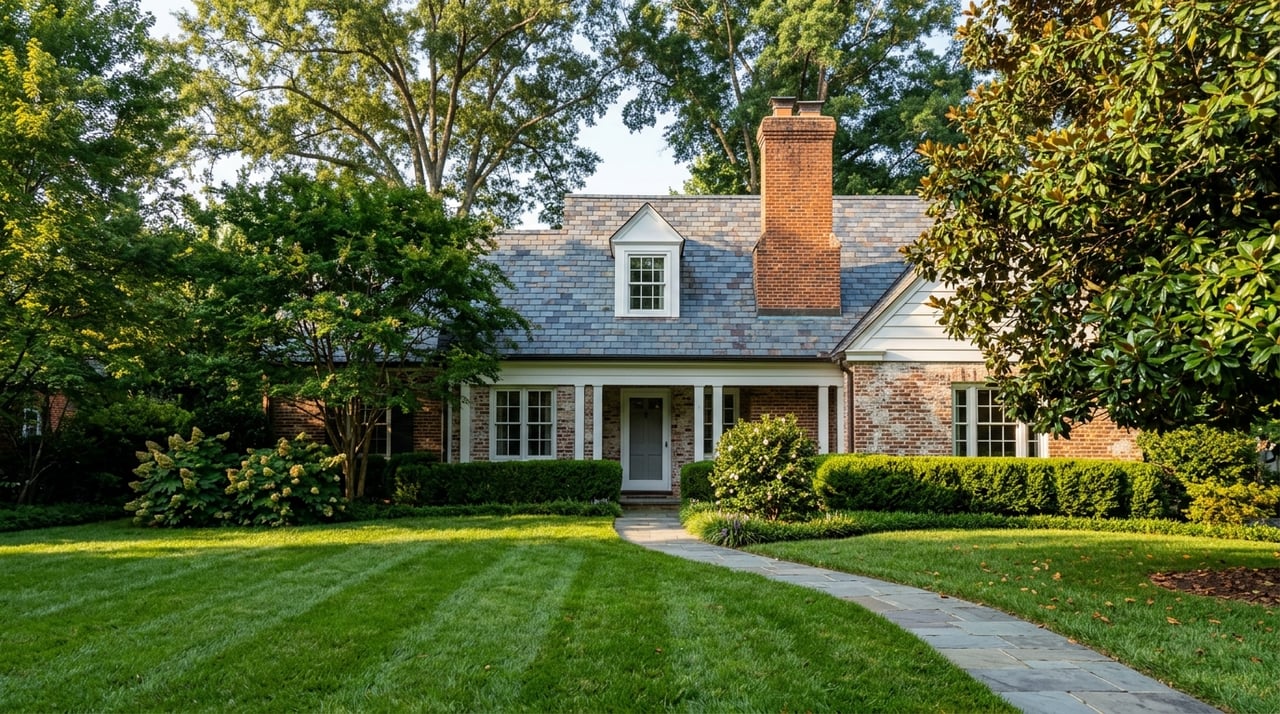
The reason the streets inside those pillars still look like 1925 isn't luck. The City of Atlanta designated Brookwood Hills a Conservation District in November 1994, a zoning overlay that governs what can be altered, added, or torn down within the residential footprint. That kind of designation typically covers lot coverage, setbacks, and demolition review for the homes it surrounds. It does not typically extend to commercial road frontage.
Peachtree Road, where the neighborhood's retail and restaurant strip sits, falls outside that protected boundary. So the conservation rules that keep a 1920s Tudor from being replaced by something out of scale have no jurisdiction over what happens to the storefront two doors down. One side of the pillar is legislated permanence. The other side is whatever a landlord and a new tenant agree to.
What Staying The Same Actually Requires
The interior's stability isn't just zoning. It's also membership. The Brookwood Hills Community Club, which owns and runs the pool, tennis courts, and playground on more than five acres at the center of the neighborhood, is a private organization that residents fund and govern themselves. Joining isn't automatic even for people who live inside the boundary lines.
A prospective member has to clear a real process:
- Submit a formal application through the club, not by email
- Provide two letters of recommendation from current members
- Wait for board approval before paying initiation fees and annual dues
- If applying as a non-resident, join a waitlist that opens for review roughly once a year, typically between February and May, with a non-refundable $250 fee just to hold a spot
That structure is a form of continuity by design. The people who decide what the club looks like next year are the same people paying for it this year, which is a very different governing mechanism than a commercial landlord chasing the highest bidder for a storefront lease.
What Turns Over Right Outside It
Walk five to ten minutes from most points in the neighborhood and Peachtree Road hands you a mix of restaurants that has never stayed still for long. R. Thomas Deluxe Grill, with its rooftop parrots, has been a fixture long enough to feel permanent. El Azteca has held its spot for years too. Sufi's brought fine-dining Persian cuisine to the same stretch, becoming one of the few Persian restaurants of its caliber in the city.
But permanence isn't the norm on this block. One address in the 1800 stretch of Peachtree cycled through three different concepts in under a decade: Bluefin Restaurant & Lounge closed at the end of 2013, Lusca opened in its place in 2014 and closed by early 2016, and HAUS Restaurant & Bar took the space after that. A separate address at 1777 Peachtree followed its own version of the same pattern. Pata Negra Mezcaleria opened there and built a following around its agave program before rebranding this spring into Patria Mezcalería, described by the restaurant itself as the next chapter of the same ownership rather than a full changeover, but a new name, a new identity, and a new menu all the same, according to Rough Draft Atlanta's April 2026 roundup of metro Atlanta restaurant openings.
Two different storefronts, two different timelines, the same underlying rhythm. That's not a sign the neighborhood is unstable. It's a sign the commercial edge is doing exactly what unprotected retail frontage does anywhere: responding to leases, chefs, and demand on a cycle measured in years, not generations.
The Preserve Runs On The Same Model As The Pool
The Alex Summers Clear Creek Preserve, roughly 75 acres of protected woods threaded through the neighborhood, isn't a city park maintained by a municipal parks budget. It's another piece of private infrastructure that residents fund directly. The Brookwood Hills Garden Club raises money for it through recurring events, including a biennial poolside fundraiser called Palm Royale, styled after a 1960s Palm Beach club and open to non-residents willing to follow the dress code. Recent proceeds have gone specifically toward restoring one of the preserve's entrances with new landscaping, benches, and swings.
That's the same pattern as the club membership: the neighborhood pays to keep its own green space intact rather than depending on outside funding that could shift or disappear. The preserve stays wooded and walkable for the same reason the pool stays open every summer. Residents built a private mechanism to make sure of it.
What This Adds Up To On An Ordinary Saturday
None of this is really about zoning maps or restaurant leases on their own. It's about what it means to live somewhere that runs two systems at once and lets them coexist without friction. The house you're in, the pool your kids swim in, the woods behind Huntington Road where a Civil War-era cannon was once found by neighborhood boys: all of that is protected by rules the residents themselves helped write and continue to fund. The dinner spot you tried in April might already belong to a different concept by next spring, and that's simply how a commercial strip without conservation overlay behaves.
The neighborhood didn't get lucky that its interior held its shape for a century while Atlanta grew up around it. It built the mechanisms to make that outcome likely, and then let the market handle everything just outside the pillars.
If you're weighing what a place like this is actually worth, the answer usually isn't in the square footage. It's in whether the systems holding it together are the kind that last. That's the kind of read Team Ellis brings to every conversation about Intown Atlanta, whether you're a longtime member of the club or just curious what's cooking on Peachtree this year.